


Marketing strategies evolve over time, but certain frameworks, such as ATL, BTL, and TTL, remain fundamental to the field. When used appropriately, they can significantly expand your brand's reach and amplify the impact of your marketing efforts. Whether you're aiming to build awareness, drive conversions, or do both, understanding the nuances between ATL, BTL, and TTL strategies is key.
At Blueprint360, we help brands navigate the evolving media landscape with smart marketing strategies. From awareness to conversions, we align ATL, BTL, and TTL tactics with your goals, audience, and budget, driving real results where they matter most.
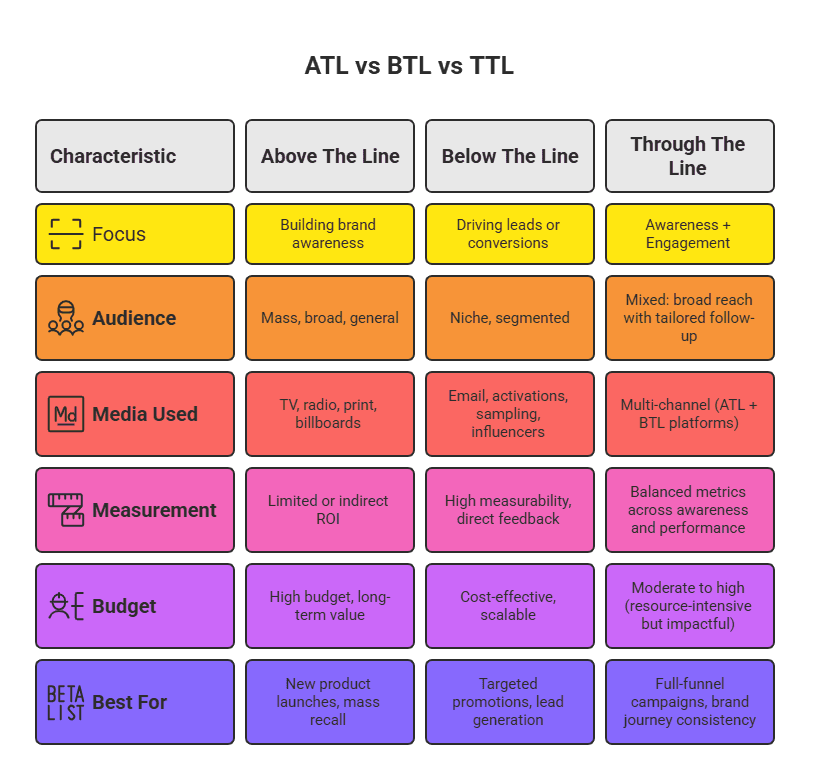
ATL refers to mass media marketing aimed at a broad audience. The primary goal is to build brand awareness and reach as many people as possible. It's not highly targeted, but is great for visibility and recall.
ATL uses traditional media platforms such as television, radio, newspapers, magazines, and billboards to reach a large and often diverse audience. Brands typically opt for ATL when launching a new product or entering a new market, where quick and widespread attention is crucial.
It's also a powerful tool when the objective is to build long-term brand equity, create emotional resonance at scale, or reinforce brand recognition in competitive spaces. However, because ATL campaigns are broad in reach, they often come with higher costs and limited targeting. Measurement of direct ROI can also be more challenging compared to digital formats.
Example: For Saheli, a non-hormonal OCP brand, we ran paid Facebook ad campaigns to reach a broad audience of women across different regions. Though we chose a digital medium, the campaign functioned like a modern ATL approach: broad, awareness-driven, and focused on visibility across demographics.
BTL marketing is highly targeted and direct, focusing on specific groups or individuals. The aim is usually lead generation, engagement, or conversion, and it offers better measurability than ATL.
BTL includes tactics such as email marketing, in-store promotions, activations, sampling, and influencer collaborations. BTL is particularly effective when the goal is to drive conversions, generate leads, or gather actionable customer feedback. It works well for brands with smaller budgets who want measurable results and personal engagement.
It also allows for more customisation and data-driven decisions, making it ideal for niche markets, localised campaigns, targeted customer engagement, and measurable ROI-focused initiatives. While its reach may be narrower than ATL, BTL offers better control and clear performance metrics.
Example: We adopted the BTL approach for Profit.co, a software product company offering OKR software for strategy execution and performance management. It helped us drive organic traffic through keyword research and content creation, including knowledge resources and blogs, targeting a specific audience segment.
TTL is a combination of ATL and BTL strategies. It uses both mass media and targeted communication to create a cohesive, integrated marketing campaign.
TTL is perfect for full funnel campaigns, where the brand wants to build awareness through mass media while also engaging and converting customers through targeted channels. It ensures that the messaging remains consistent from the billboard to the digital ad to the point-of-sale interaction.
TTL strategies are best used for multi-phase campaigns such as festival promotions, national launches with regional activations, or campaigns that follow a consumer through multiple touchpoints. While TTL can be resource-intensive, it offers the best of both worlds: broad reach with focused impact.
Example: For Study Smart CBSE , we employed a TTL strategy through website and mobile app development (BTL), SEO, PPC campaigns (BTL), social media marketing (ATL + BTL), and educational blogs, covering the full funnel from awareness to lead generation.
Choosing the right marketing approach — ATL, BTL, or TTL — comes down to understanding your brand's goals, audience, and where you are in your growth journey.
ATL, BTL, and TTL are foundational strategies in the marketing world, each offering unique strengths depending on your brand's objectives and audience. To truly maximise your brand's reach, it's essential to understand when and how to apply these approaches.
At Blueprint360, we specialise in crafting marketing strategies that do more than just reach people; they resonate. By aligning the right mix of ATL, BTL, and TTL tactics to your objectives, we help your brand connect with the right audience in a way that's impactful, memorable, and results-driven.
1. What is the difference between ATL, BTL, and TTL?
ATL focuses on mass visibility using media like TV and print. BTL targets specific audiences with direct, measurable tactics. TTL blends both to create a consistent, full-funnel marketing approach.
2. What is an example of TTL marketing?
A TTL campaign might include a TV ad for awareness and digital ads or retail activations for engagement. It connects the brand message across channels to guide the customer from interest to action.
3. What is the use of ATL and BTL?
ATL builds awareness and emotional recall across a broad audience. BTL drives specific actions like sales or sign-ups through focused, direct engagement. Brands use them based on goals and audience reach.
4. What is the TTL approach in marketing?
TTL combines the wide reach of ATL with the precision of BTL. It helps brands stay visible while also encouraging interaction. It is ideal for campaigns with multiple touchpoints.